
Computing
Processors, cloud access, algorithms, compilers, simulation, error work, and classical orchestration.
Evaluating quantum technology
The phrase “quantum solution” can refer to a processor, sensor, network component, refrigerator, software tool, experiment, or consulting service. Before comparing two offerings, find out what each one actually does and what evidence supports the claim.
Cryogenics
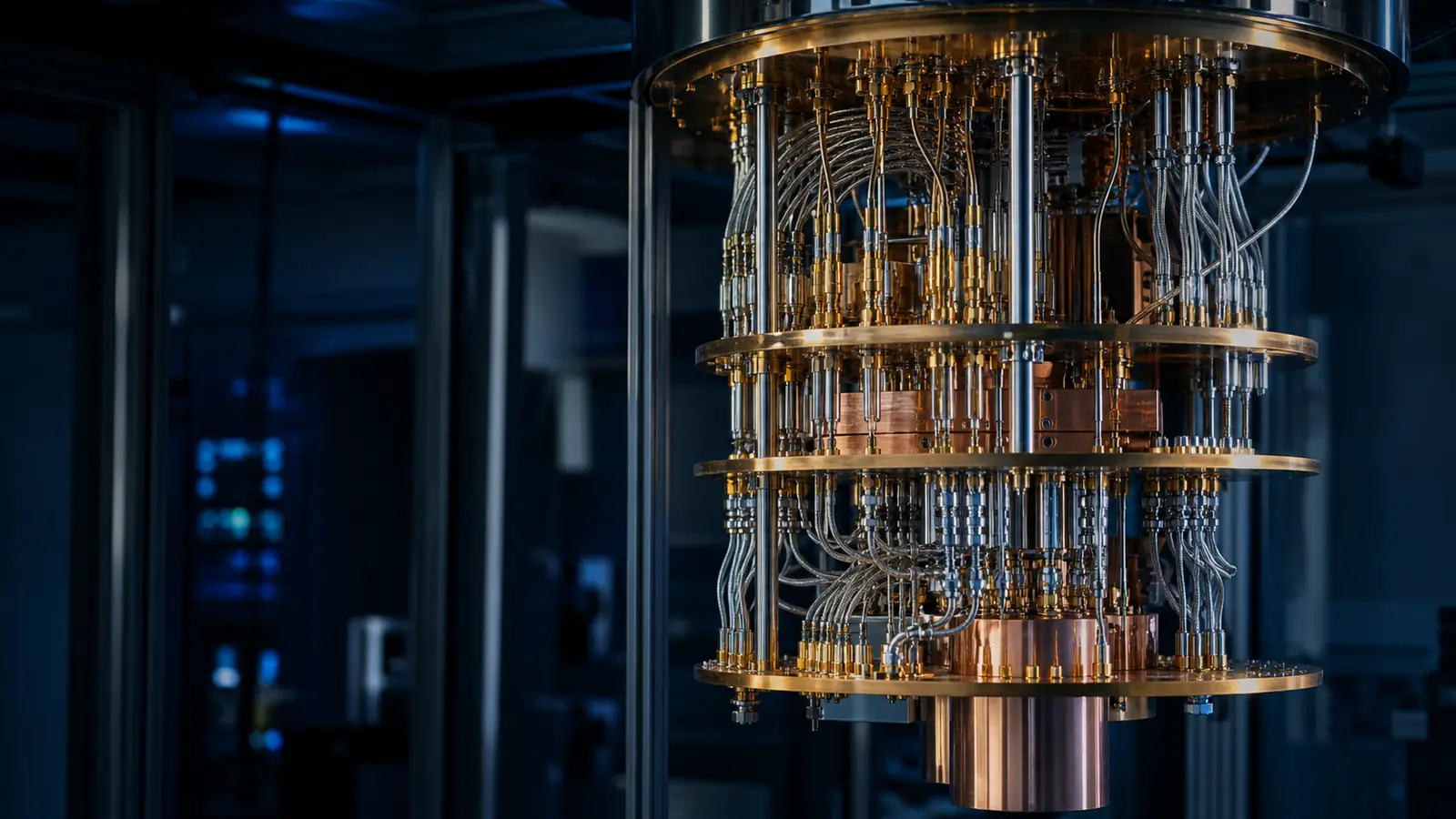
Superconducting processors operate close to absolute zero because heat can disturb their quantum states. The visible refrigerator provides the thermal environment. Control electronics, wiring, shielding, calibration, software, and operators complete the system.
Other hardware approaches use trapped ions, neutral atoms, photons, or semiconductor devices. Their requirements differ. Read Quantum Computing Explained from NIST for a public overview of these qubit types.
Read the cryogenics Quantum BriefWhat the label may cover
These categories help explain the field. They are not listings, endorsements, or certifications.
Processors, cloud access, algorithms, compilers, simulation, error work, and classical orchestration.
Measurements that use quantum behavior to detect time, fields, motion, or other physical properties.
Components and systems for distributing quantum states, keys, or timing across a network.
Cryogenics, vacuum, photonics, controls, fabrication, shielding, test equipment, and facilities.
Research, engineering, education, integration, security planning, and domain-specific evaluation.
Before accepting a claim
Quick answers
A quantum solution may involve computing, sensing, communications, supporting hardware, software, or expert services. The label alone does not tell you what the offering does, how far it has developed, or whether quantum behavior produces the claimed benefit.
A good description starts with the problem, identifies the quantum component, explains the comparison, and tells you whether the result came from a laboratory or a working product.
Source: Quantum Information Science
Superconducting quantum computers operate at extremely low temperatures because heat can disturb their circuits. Systems built with trapped ions, neutral atoms, particles of light, or semiconductor devices have different cooling and control needs.
The refrigerator is only one part of the machine. Wiring, shielding, control electronics, software, calibration, and trained operators also affect what it can do.
Sources: Quantum Computing ExplainedMeasuring Up: Coming Out from the Cold
Start with the exact problem, the method used for comparison, and the evidence. Ask whether the numbers include the full system, whether the test used a strong conventional method, and whether anyone outside the provider has reproduced the result.
Qubit count does not answer those questions by itself. Error rates, connections between qubits, runtime, data preparation, and error correction can all change what a result means.
Source: Assessing the Benefits and Risks of Quantum Computers
Last checked 2026-07-21 through our editorial review process.
What we do not offer
We do not certify products, sell sponsored placements, or recommend purchases. If we develop a discovery tool later, it will need to keep those boundaries clear.
Ask about a claim