
Five questions to ask when someone presents a quantum solution
Five plain questions that help separate a promising quantum experiment from a product that is ready for everyday use.
Quantum announcements can be hard to judge. The same words are used for theories, laboratory experiments, cloud access, supporting equipment, consulting, and finished products. You do not need a physics degree to sort them out. Start by asking the person making the claim to explain what was done and what remains unfinished.
1. What exact problem is the quantum system solving?
Ask what information goes into the system, what result should come out, and why that result matters. “Optimization,” “simulation,” and “artificial intelligence” cover many different tasks. A good explanation names the task and the decision the result is meant to support.
This question also tells you whether quantum computing is central to the work. Some products use ordinary software to prepare data, send jobs to quantum hardware, or interpret the results. Others use quantum-inspired mathematics on conventional computers. Those tools may have value, but they are not the same as running a calculation on a quantum computer.
If the explanation never gets more specific than a long list of industries, there is not enough information to evaluate the claim.
2. What is the comparison baseline?
A claim about speed or accuracy needs a comparison. Ask which conventional algorithm, computer, data set, and time limit were used. Find out whether the comparison used one of the strongest methods available at the time.
A comparison can be misleading if a specialized quantum experiment is tested against weak conventional software. It can also leave out time spent preparing data, calibrating the machine, repeating the calculation, or processing the answer.
The comparison does not have to settle every scientific question. It does need enough detail for another qualified team to understand what happened.
3. What evidence supports the result?
Different kinds of evidence answer different questions. A theory paper can prove something important about an algorithm without showing that today’s hardware can run it at a useful scale. A laboratory experiment can show that a device works without showing that it improves a business process. A customer pilot can teach a team how the system behaves without proving a broad advantage.
Ask whether the work was peer reviewed, repeated by an independent group, or tested by a customer under realistic conditions. It is also worth asking which measurements were chosen before the test and which were added after the results were known.
NIST’s assessment of quantum computing benefits and risks separates near-term techniques from the capabilities expected of fault-tolerant systems. That distinction is important whenever a claim moves from research evidence to commercial language.
4. What does the complete system require?
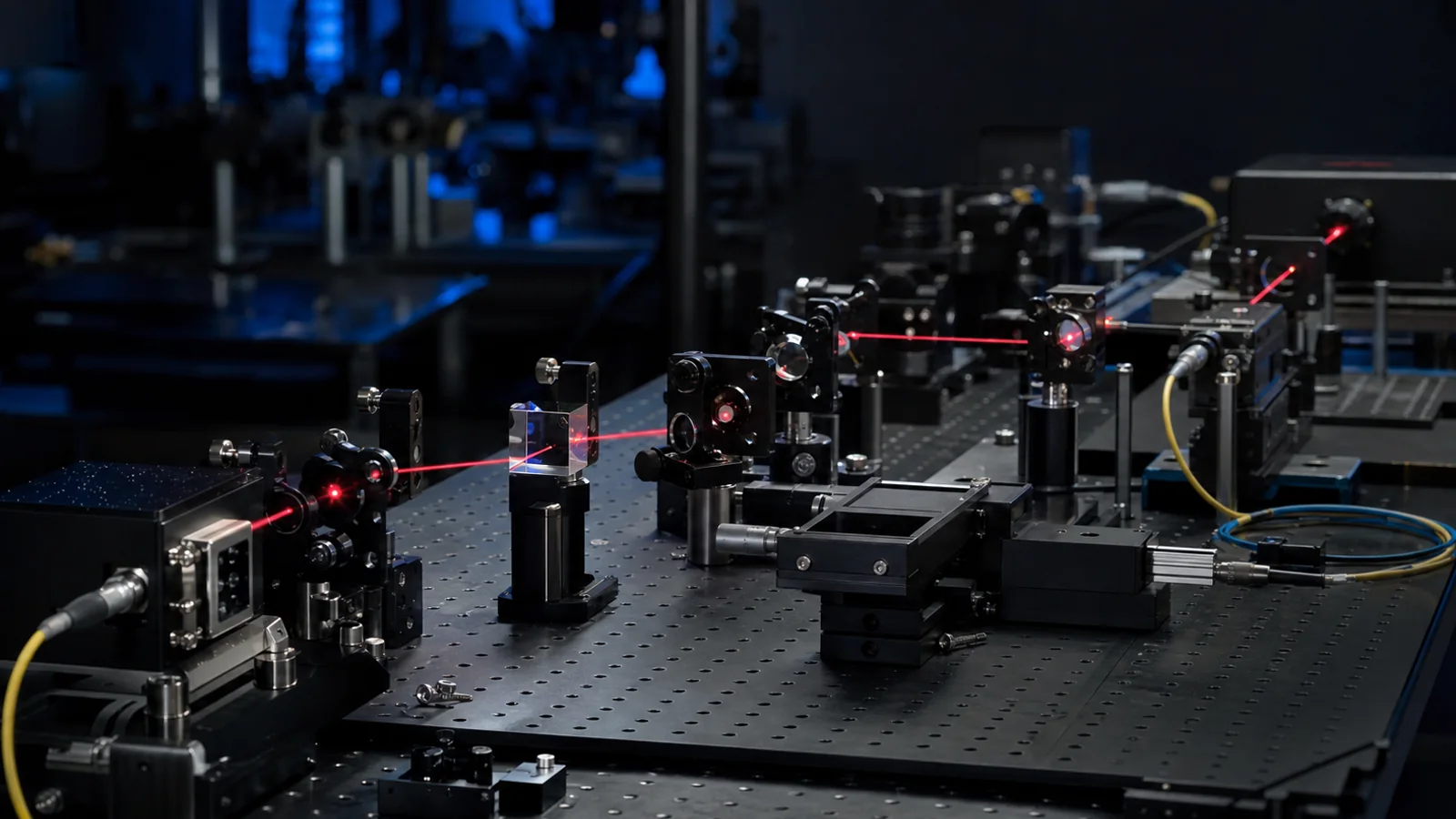
A quantum processor does not work alone. Depending on the design, the system may need extreme cooling, vacuum equipment, lasers, control electronics, shielding, networking, calibration, software, and specially trained staff.
Ask whether the stated cost and runtime include all of those parts. If the processor is accessed through the cloud, find out what happens before and after the quantum job. If the claim is about energy use, ask which equipment was included in the measurement.
The same principle applies to performance figures. Qubit count, gate speed, or coherence time can describe an important property without showing how the complete machine performs on the stated problem. NIST’s quantum computing overview explains why qubit type, error behavior, and control requirements differ across hardware approaches.
5. What remains between this result and routine use?
Ask about the next engineering step, not a distant vision. Does the work need lower error rates, more reliable manufacturing, a larger device, better data, regulatory review, lower operating costs, or an independent test?
A responsible answer names those dependencies and explains the order in which they need to be addressed. It distinguishes a research milestone from a product release, and a product release from a result that has worked in normal operations.
Timelines deserve the same discipline. A roadmap is a statement of intent. It becomes evidence only as milestones are met and the results can be examined.
How should the five answers fit together?
Taken together, the answers should tell one consistent story:
- The problem explains why the work matters.
- The baseline shows what the quantum approach must improve.
- The evidence shows what has actually been demonstrated.
- The system boundary reveals the resources required.
- The remaining path shows how far the result is from routine use.
Contradictions are informative. A claim of immediate readiness does not fit with a system that still needs an undefined hardware breakthrough. A claim of advantage does not fit with an absent classical baseline. A precise performance number does not compensate for a vague problem.
What this means
You do not have to decide whether the entire quantum field will succeed before evaluating one product or result. Keep the discussion focused. Ask what happened, what it was compared with, which conditions mattered, and what has to happen next.
The answers may not be simple, but they should be specific. A technical reader should be able to inspect the evidence, and everyone else should be able to understand the decision. That is how a conversation moves from excitement to judgment.
Editorial disclosure: This Quantum Brief is educational. It is not an endorsement, procurement recommendation, legal advice, or investment recommendation.